
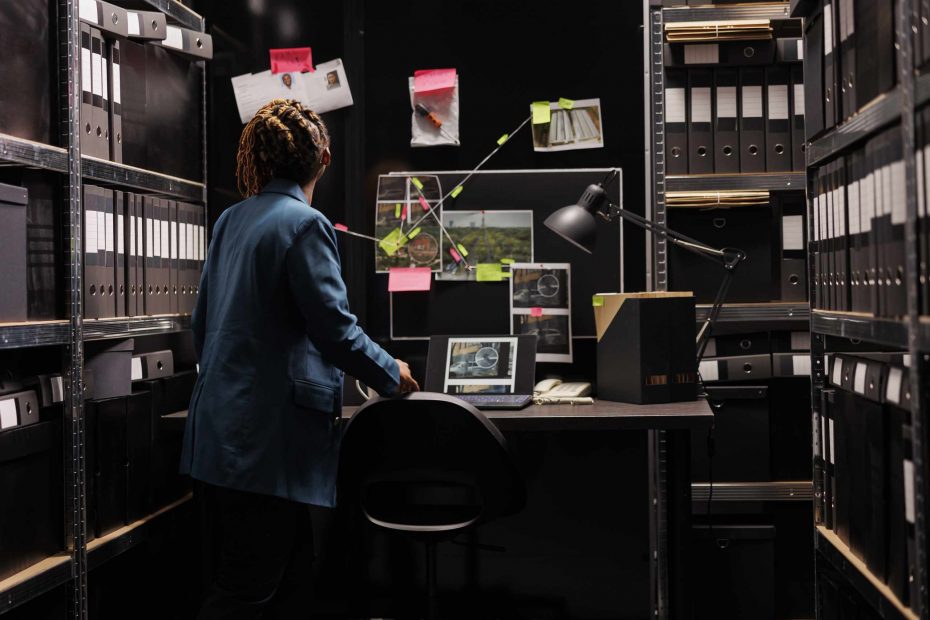
You find a digitized letter in an archive catalogue. You download the image and save it with the writer’s name. Several weeks pass, and you no longer remember which collection it came from, why it was filed alongside certain records, or how you can find it again. The letter may still be legible, but you’ve lost significant parts of its archival context. Knowing the hierarchy helps you avoid losing track of this information.
A fonds is a grouping of records originating from or collected by the same person, family, or organization as a result of their activities. Some archives call these record groups or collections. For example, a municipal office might have generated meeting minutes, correspondence, accounting records, maps, and inspection reports. Even if the subject matter varies from document to document, all of these records are housed together because they originate from the same source.
Often, large volumes of records will be further subdivided into series. A series is a grouping of records created through similar activities, kept in similar formats, or employed for related functions. Within the municipal fonds, there may be separate series for council minutes, building permits, tax records, and public works correspondence. Series descriptions help researchers determine which portion of a collection to focus on, since there’s no need to review every record available.
Records within a series are sometimes organized into files or folders. One file may include correspondence about a single project, records relating to a specific person, or documents created within a set time period. A folder title provides a general idea, but it does not capture the entire contents of a folder. A folder titled “Bridge Repairs, 1954” could include cost estimates, complaints, photographs, handwritten calculations, and letters from various departments. Its placement within the public works correspondence series tells you more about its context than the title alone.
An item is an individual record, like a single letter, photograph, report, map, or register entry. To practice tracing the hierarchy, pick one record from a catalogue search and follow it upwards. Identify the item, its folder or file, the series it belongs to, and the fonds, record group, or collection above it. Record each level in your research log next to the repository name and reference code. If any levels are not included, do not fabricate a label; simply note that the level is missing.
The hierarchy becomes important when analyzing records. For example, a typed list of names could be a membership register, an attendance record, a financial ledger, or a draft of a list. Its proximity to other records, the title of its folder, its series, its creator, and the original ordering all contribute clues to its function. Analyzing a single record without its context might lead you to draw an erroneous conclusion. Examining the same record in its grouping makes it easier to determine what the record itself says versus what the surrounding records imply.
Before saving a scanned or transcribed record, consider whether someone else could reconstruct your process from the details you have recorded. Can they identify the repository, collection/fonds, series, file/folder, item, and reference code (if applicable)? As long as these levels remain linked, a single record maintains its relationship to the greater body of evidence.